The transition happens to systems already running
Energy has to keep moving while the system changes. The transition happens to what is already running. It is not a replacement.
2026-09-01 · 8 min · Energy systems · Markets · Strategy
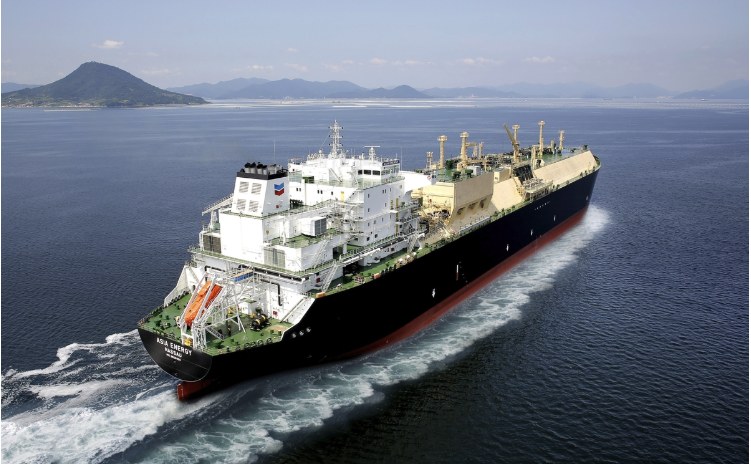
Energy has to keep moving while the system changes. The transition happens to what is already running. It is not a replacement.
Most writing on the energy transition starts in the future and works backwards: a new molecule, a new turbine, a new slide.
The system that has to get there is the one already running.
Crude and products. Pipeline gas and LNG. Grids, ports, terminals, ships, and the people who know how those things fail.
I am a mechanical and marine engineer. For most of the past two decades, my work has been around oil tankers and LNG carriers: first at sea, then in technical management, newbuildings, drydockings, life extensions and the daily running of fleets.
An MSc in oil and gas project management and an MBA gave me two other ways to read the same assets: how they get built, and why anyone decides to build them.
That is not separate from the energy transition. It is the installed base through which the transition has to pass.
A plan eventually has to survive contact with contracts, class rules, drydock windows, fuel availability, operating limits, capital cycles and crews who have to make the machinery work.
If it cannot, it is still a presentation.
A fuel that cannot be carried is not yet a fuel system
The transport layer is often overlooked, and the newer fuels are not at the same point on it.
LPG shows what maturity looks like. Global seaborne trade reached a record 145 million tonnes in 2025, supported by a fleet of more than 1,600 carriers. LR
Ammonia already moves internationally by sea, but only about a tenth of global production is exported. The transport system exists; the scale required for a much larger energy role does not yet. IEA
Liquefied hydrogen is much earlier. Suiso Frontier, the first purpose-built liquefied-hydrogen carrier, has a cargo capacity of 1,250 cubic metres and carries hydrogen at about −253°C. A modern LNG carrier is commonly around 174,000 cubic metres. In January 2026, Kawasaki contracted a 40,000 cubic metre liquefied-hydrogen carrier. It is a large step from the demonstrator, but it is not yet a commercial fleet. Ministry of Transport Singapore
CO₂ presents a different transport problem. Pipelines carrying large volumes may operate in dense phase, where water, impurities, decompression behaviour and fracture control become design questions. At sea, captured CO₂ is transported as liquid CO₂, with pressure and temperature selected around the scale and design of the transport chain. Large low-pressure carrier concepts are still being developed. HSE
Where a molecule needs dedicated ships, containment, terminals and handling systems, those assets have to come from a finite number of yards, suppliers and engineering organisations.
They also take years.
A target does not move a molecule. Infrastructure does.
LNG belongs in the same book. It is a chapter, not the title.
Treating every LNG cargo as climate policy is as unhelpful as treating every cargo as though nothing is changing. The useful questions are usually more ordinary: what flexibility costs, what a dual-fuel ship actually burns when relative fuel prices move, where infrastructure exists, what can be converted, and what an importing or exporting economy captures from the trade around it.
Those are market questions, engineering questions and capital questions at the same time.
Every transition decision becomes a project
Strategy decides what to build.
The project decides whether it gets built, and when.
Between a board approving a dual-fuel newbuilding and that ship entering service lie specification, contracting, plan approval, construction, commissioning, sea trials and delivery.
A retrofit in drydock runs through a compressed version of the same sequence. So does a terminal conversion. So does new infrastructure for a different cargo.
Much of the transition will arrive this way: one project at a time.
And projects tend to become vulnerable at the interfaces: between design and construction, between one contractor and another, and between construction and operation.
For an asset owner, much of strategy therefore becomes sequencing.
Which commitments should be made now?
Which should remain open?
What does it cost to preserve the option?
And when does keeping an option open become more expensive than making the decision?
That is an optionality question. It applies to a fleet order as much as to a gas contract.
The line I watch most closely is handover.
A ship is delivered with drawings, manuals, certificates and warranties. But the reason a particular decision was made often leaves with the people who made it.
That is where the project meets the next problem.
People are the constraint the slides rarely show
Machinery can change faster than the knowledge around it.
That problem is familiar in digitalisation, automation and new fuel systems alike. A technology may be technically ready while the organisation receiving it is not.
My doctoral work in human capital development brought me back to that question: how knowledge moves through organisations and between generations while the systems underneath them change.
Continuity is not only an HR issue.
It has an operating cost.
When technical knowledge disappears, its absence can return as longer troubleshooting, repeated mistakes, off-hire, incidents, delayed maintenance or drydocks that take longer than planned.
A manual preserves instructions.
It rarely preserves judgment.
That distinction matters when an industry is changing several things at once: fuels, machinery, software, regulation and the generation of people operating them.
So those are the subjects I will write about here: the markets, the assets, the projects, and the people connecting them.
The transition will not arrive at a system that has stopped and waited for it.
It has to be built into one already running.