The manhole that wasn't there
What an owner's site team protects while a ship is being built.
2026-09-01 · 11 min · Construction · LNG · Governance
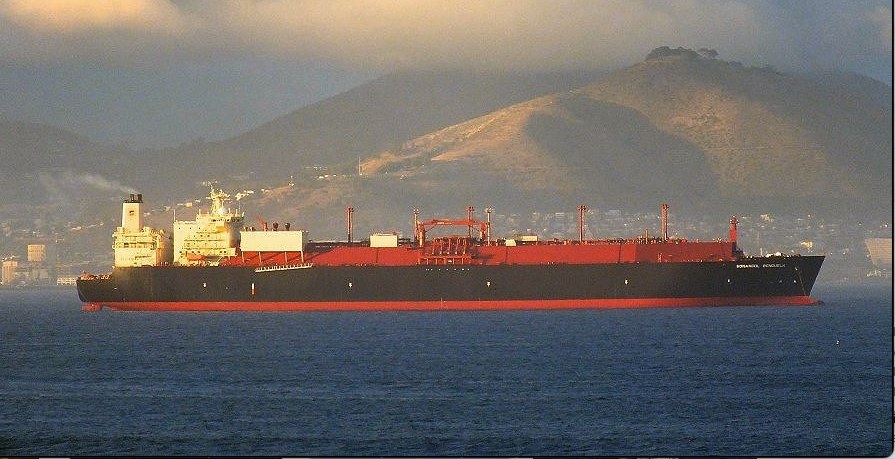
Three sister ships, built to the same drawings. On each, a large seawater intake pipe. On the drawings, an inspection manhole set into it.
Two of the ships had the manhole. The first did not.
Nobody noticed for years.
Crews and superintendents moved between the three ships, but nobody compared this particular detail because nobody had reason to think the ships differed. The omission surfaced only when the first ship's pipe needed inspecting.
Without the manhole, there was no way in from inside the ship. The alternatives were more complicated: divers outside the hull to blank the sea suction so the line could be opened, or waiting for a drydock.
A small thing, missed at the yard and missed during inspection.
Every operator has a version of it. A pipe that later has to be modified. A machine installed where nobody can reach it. A valve that can only be maintained after something else is removed. A design choice that nobody on board can explain.
The industry has larger versions too.
What a missed detail costs
Two 174,000 cubic metre LNG carriers, SK Serenity and SK Spica, were delivered in 2018 with the newly developed KC-1 cargo-containment system. Shortly after delivery, defects were identified in the cargo holds and the ships' operations were suspended. In December 2023, a London-seated arbitration tribunal ordered the builder, Samsung Heavy Industries, to pay more than US$290 million in damages relating to the defects. Brick Court Chambers
That was not simply an inspection failure. It involved a novel containment system and questions about the design itself. But the construction lesson is useful. Once a technical choice has been incorporated into a delivered ship, dealing with it is very different from dealing with it while the ship is still being built.
A different kind of case appeared on the RRS Sir David Attenborough.
The vessel was handed over in December 2020. Three months later, during a lifeboat familiarisation exercise, the port lifeboat fell from its davits with three crew inside. The crew suffered minor injuries. The UK Marine Accident Investigation Branch found that the davit installation had not been fully completed in accordance with the manufacturer's specification, although it had been accepted during the approval process. The ship later returned to the builder's yard, where completion of the davit installation formed part of the defect rectification work. GOV.UK
The survey finding matters here. MAIB found that a comprehensive initial safety-equipment survey should have made the incomplete installation apparent. It also found that a defect previously raised had been recorded but not acted on and was later closed when the davits were commissioned and accepted. The investigation concluded that none of the organisations involved in survey, certification, acceptance and quality assurance had raised the problem before the system was accepted in an incomplete state. GOV.UK
Again, this was not simply a failure of an owner's site team. Maintenance and operating factors also contributed to the accident. The narrower point is that an installation can pass through construction, commissioning, survey and acceptance while something important remains wrong.
The US Government Accountability Office found a similar timing problem in naval shipbuilding. Construction defects, it noted, often become evident shortly after delivery. By then the ship has moved from construction into operation. Government Accountability Office
That change matters commercially.
In Star Polaris, a bulk carrier suffered a serious engine breakdown about seven months after delivery. The shipbuilding contract, based on an amended SAJ form, provided a 12-month guarantee for material and workmanship. The dispute that followed distinguished between repairing the defect and paying for its wider consequences: the buyer also claimed towage, agency and survey costs, off-hire and diminution in value. Steamship Mutual
Public shipbuilding contracts show why the distinction matters. One contract filed with the US Securities and Exchange Commission provided a 12-month guarantee for defects in material, equipment and workmanship, while expressly excluding consequential loss, loss of time, profit and earnings. SEC
A defect may therefore remain the builder's responsibility while much of the operational consequence falls elsewhere.
That is one reason construction matters so much.
Three parties, different jobs
From outside shipbuilding, an owner's site team can look redundant.
The yard is building the ship. A classification society is surveying it. Why does the buyer need another group of people at the yard?
Because the functions are different.
The builder has the contractual obligation to design and construct the vessel in accordance with the contract and specification.
A classification society reviews the design and surveys construction to establish reasonable assurance that the vessel complies with its rules. Where authorised by a flag administration, class may also carry out statutory surveys and certification. Safer and Cleaner Shipping - IACS
The buyer's representatives are there for something else. They protect the buyer's interests under the contract and specification. They review drawings, attend agreed inspections and tests, raise non-conformities, follow their correction and keep a record of what was accepted during construction.
A publicly filed shipbuilding contract makes the distinction clear. It separately provides for class inspection and for a buyer's supervisor, gives the supervisor access to the vessel, machinery, equipment, materials and subcontractors, and states that approval by the buyer, its representative or class does not relieve the builder of its contractual obligations. SEC
The functions overlap.
They are not interchangeable.
Absence is a form of consent
Drawing review can look administrative until a deadline is missed.
In the same publicly filed shipbuilding contract, the buyer had fourteen days to return specified plans and drawings with approval or comments. If no response came within that period, the drawings were deemed automatically approved. SEC
The sea-trial provisions were equally direct.
The buyer and its supervisor were to receive advance notice of the trial. If the buyer's representatives failed to attend and delayed the trial by more than seven days, the buyer was treated as having waived the right to have them on board. The yard could conduct the trial with class present and proceed on the basis of the contractual certification process. SEC
There is a practical point behind the legal language.
A manhole shown on a drawing does not become a manhole in the pipe because everybody intended it to be there.
Someone still has to look.
Who speaks for the buyer
The yard should not have to work out, from one meeting to the next, who can speak for the buyer.
A shipbuilding project can involve the owner, technical manager, charterer, financiers, class, flag, designers, makers and consultants. Their interests may overlap, but their authority does not.
The buyer therefore has to define who may comment, who may accept, who may instruct a change and what must be referred back to shore management.
Public shipbuilding contracts do this explicitly. The buyer appoints its representative in writing and defines the authority that representative carries. In one contract, even modifications to the specification could be negotiated by the supervisor only to the extent of authority previously notified by the buyer to the builder. SEC
That discipline matters even more across a series of sister ships.
Something found on Hull 1 should not have to be rediscovered on Hull 2.
Boring on purpose
Good newbuilding supervision is usually uneventful.
The representative is not there to win arguments with the yard. Nor is the job to turn every disagreement into a contractual dispute or to narrate the project back to shore.
The standard should be consistent.
A non-conformity is identified. The drawing, specification or agreed requirement is established. The yard responds. The correction is checked. The record is closed.
Then the team moves on.
Shore management needs facts it can act on, not atmosphere.
Years later, nobody operating the ship will care who wrote the sharper email during construction. They will care whether the equipment works, whether it can be maintained and whether the ship was built as specified.
New technology raises the stakes
A newbuilding fixes major choices for decades.
Propulsion machinery, cargo systems, fuel arrangements, automation, containment technology and major equipment are selected years before the consequences of those choices are fully known in service.
Some systems arrive at the yard with long operating histories.
Others do not.
SK Serenity and SK Spica were the first ships fitted with the KC-1 containment system. The later defects and prolonged dispute do not make the case against new technology. They make the case for scrutiny when operating experience is limited. Brick Court Chambers
New technology does not deserve less challenge because it is new.
It deserves more careful questions because fewer of those questions have already been answered in service.
The last job
The manhole was on the drawing the whole time.
What was missing was the connection between the drawing and the steel on the first ship, and later the connection between what had been learned on one sister and what should have been checked on the others.
Over a build, a site team accumulates information that the final drawings will never fully contain.
Why a deviation was accepted.
Why a test was repeated.
Which item caused trouble during commissioning.
What was changed on the first ship.
What still needs watching on the second.
That record has a commercial use. If a defect appears during the guarantee period, the owner's contemporaneous inspection, test and correspondence records may matter.
It has an operational use too.
A ship can be delivered with drawings, manuals, certificates and test records and still arrive without much of the reasoning behind the decisions that shaped it.
That reasoning lives, for a time, in people.
Passing it to the crews who will operate the ship, to the shore team that will support it and to the people building its sisters is the last job of the build.
It is also one of the easiest to skip.