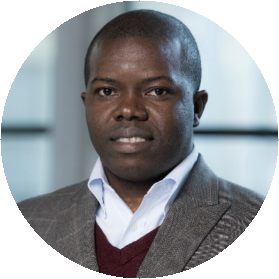
About
Ilidio Cagiza
PhD · MBA · MSc · Mechanical and Marine Engineering
Energy systems, and how they change.
They do not run themselves.
I have spent twenty years around the part of the energy system that moves: ships, cargoes, machinery, markets, and the people responsible for keeping them running.
The interest started much earlier.
I grew up in Cazenga, Luanda. We did not have electricity at home. Families that could afford them ran small petrol generators. Everyone else used candles or homemade petrol lamps. I did most of my schooling, through the end of secondary school, by that light.
So energy was practical before it was theoretical.
In secondary school I studied Electricidade e Electrónica and encountered the first law of thermodynamics: energy is neither created nor destroyed, only converted and transferred.
It gave a name to something I had grown up watching.
What we call energy production is really a chain of conversion, movement, storage and use. Somewhere along that chain, molecules have to move. Infrastructure has to work. Capital has to be committed. And people have to make decisions before they can know everything that will happen next.
That middle ground has become the subject of my working life.
From engine rooms to energy systems
I went to sea at nineteen as a trainee marine engineer.
My engineering education took me between India, Glasgow and ships at sea. I later qualified as a marine engineer officer through the UK Maritime and Coastguard Agency and spent four years working in engine rooms.
A tanker makes the energy chain unusually visible. A cargo exists because someone believes those molecules have greater value somewhere else. That commercial decision becomes a voyage. Enough voyages become a trade. Changes in trade reshape fleets. Eventually they influence which ships are built and which technologies go inside them.
That connection between engineering and economics interested me more as my career moved ashore.
In Houston, Texas I worked in technical management of oil tankers and LNG carriers for Sonangol. I then spent seven years at Chevron. The engineering mattered, but one of the larger lessons was organizational: complex systems perform only when knowledge moves through the organization as reliably as information and equipment do.
That question eventually led me to doctoral work in human capital and organizational development.
I am now back at Sonangol, working on the next generation of LNG carriers being built in South Korea. Newbuilding brings much of the subject together. Decisions made on a drawing or in a shipyard today can remain inside a vessel for twenty or thirty years. The immediate job is straightforward to describe: help ensure that the ships are built as specified and that what is delivered can perform safely, efficiently and reliably in service.
The larger subject remains the same.
Energy systems, how they change, and the people who run them.
Engineering, economics and change
My education followed that question rather than a single discipline.
Mechanical and marine engineering taught me how machinery works.
An MSc in project management at the University of Liverpool widened the frame to projects and the oil and gas value chain.
Graduate coursework in industrial and systems engineering at Texas A&M added systems thinking. It was coursework, not a conferred degree.
An MBA at Imperial College London added strategy, finance and the economics of whether technically possible projects actually get built.
My PhD brought the focus back to organizations, leadership and the way knowledge and capability develop inside them.
I use both sides of that education.
Engineering asks what can be built.
Economics asks whether it makes sense to build it.
Organizations determine whether people can make either one work.
The physical system still matters
Much of the public discussion about energy transition starts with policy, finance or targets.
Those matter. But eventually every transition has to pass through physical infrastructure.
A fuel has to be produced. It has to be stored and transported. Equipment has to be designed for its properties. Terminals, ships or pipelines have to exist. Safety regimes have to mature. Capital has to be committed years before the asset earns anything. People have to know how to operate it.
Existing fuels have systems around them that took decades to build. Newer energy carriers are at different stages of that process.
That does not make the technical problems reasons to stop.
It makes them part of the problem that has to be solved.
The same is true of the human system. New fuels, automation and increasingly intelligent machinery require new knowledge at the same time that experienced operators are leaving the workforce. Technology can move faster than organisational memory.
I think that constraint will matter more than we usually assume.
Why Angola appears often in my work
Angola is where I am from, and it is also a useful place from which to examine a larger development question.
Producing a commodity is not the same thing as capturing the capabilities and industries around it.
Countries can export energy while importing much of the shipping, engineering, technical management, finance and commercial capability required to move it. The difference between participating in a value chain and building domestic capability around it is therefore a recurring subject in my work.
I approach that as an economic and industrial question, not as a representative of any institution.
But it is not an abstract one for me.
The point of understanding a system is eventually to be useful to the people living inside it.
Continuity
There is another thread running through the story.
My first full-time job was teaching.
At nineteen, while in my first year at the Faculty of Engineering at Agostinho Neto University, my former secondary school asked me to return and teach Electricidade e Electrónica to tenth-grade students.
I taught for eight months, until the scholarship that took me into marine engineering came through.
At the time, it seemed like a short detour before an engineering career.
Twenty years later, after ships, engine rooms, superintendent work, an MBA and a doctorate concerned with human capital and organisational development, it looks less like a detour.
Much of engineering is ultimately about continuity: building something that works after the people who built it have gone.
Organisations face the same problem.
What I write about
- Energy systems: production, transport and trade
- Shipping, LNG and the movement of molecules
- Markets, contracts, optionality and capital
- Newbuilding, operations and technical decision-making
- Energy transition as a physical and industrial system
- Knowledge transfer and the people who operate complex systems
- Energy and industrial development in exporting economies, especially in Africa
- AI and computation where they materially change operations, safety or trade
Selected research
- AI-Powered Advisory Platforms for Sustainable Marketing Innovation in SMEs: Empirical Evidence from Underserved U.S. Markets
Sustainability, 2025.
Cagiza, C.; Faustino, M.; Cagiza, I.; Cajiza, A.
- Development Finance Institutions, Political Conditions, and Foreign Direct Investment in Sub-Saharan Africa
Journal of Economics and International Finance, 2025.
Cagiza and co-authors
Commercial Optionality in LNG Trade and Shipping: Contract Flexibility, Portfolio Reallocation and Resilience under Systemic Disruption
Under review.
Maritime safety management in the AI era: recoupling risk, action, and organizational learning
Under review.
Elsewhere
Work: Luanda · Houston · New York · Singapore · Mokpo
Education and training: Pune · Glasgow · Liverpool · College Station · London · Edinburgh · Hattiesburg